

Human Design Gate 30, the Gate of Recognition of Feelings

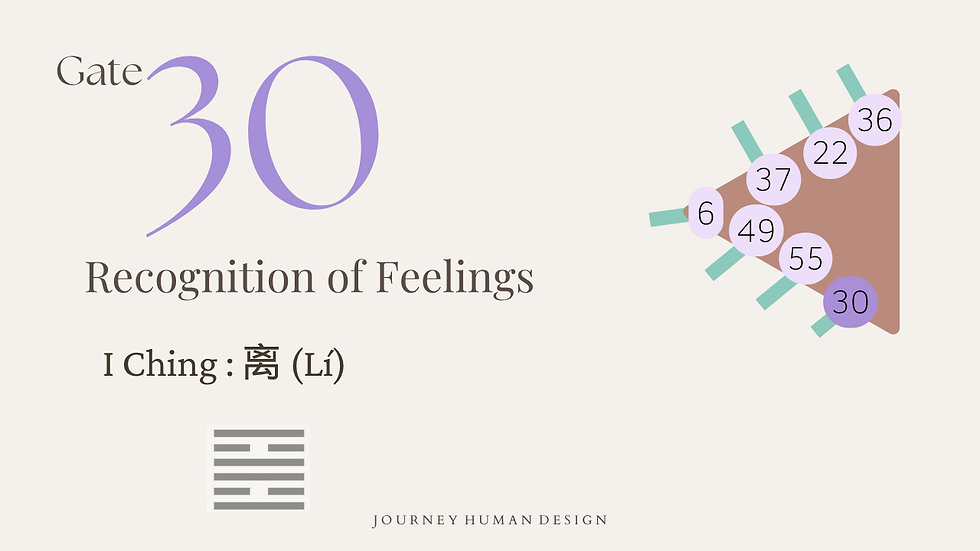
Some desires arrive and pass within a day. Others settle in and burn for months, a wish to live abroad or to start over in a different line of work, held so strongly that it colours everything else. In Human Design the capacity to feel a desire this fully is traced to Gate 30, which sits in the Solar Plexus.
The Gate of Recognition of Feelings
Gate 30 is the Gate of Recognition of Feelings, also called the Gate of Desires. Its image comes from Hexagram 30 of the I Ching, The Clinging, Fire (Lí, 離), a flame that burns brightly only as long as it has something to hold on to.
Gate 30 sits in the Solar Plexus, the center of emotions and the emotional wave, and belongs to the Sensing circuit of Collective circuitry, the abstract process of learning through experience. Gate 30 carries the fuel of that process: the desire to feel, and the intensity that comes with wanting something before it has been lived. Like the flame in the hexagram, that intensity needs something to attach to, and it often attaches to an image of what life could be. Each gate in the Solar Plexus carries its own fear, and for Gate 30 it is the fear of fate, a nervousness about what will happen once the desire is followed.
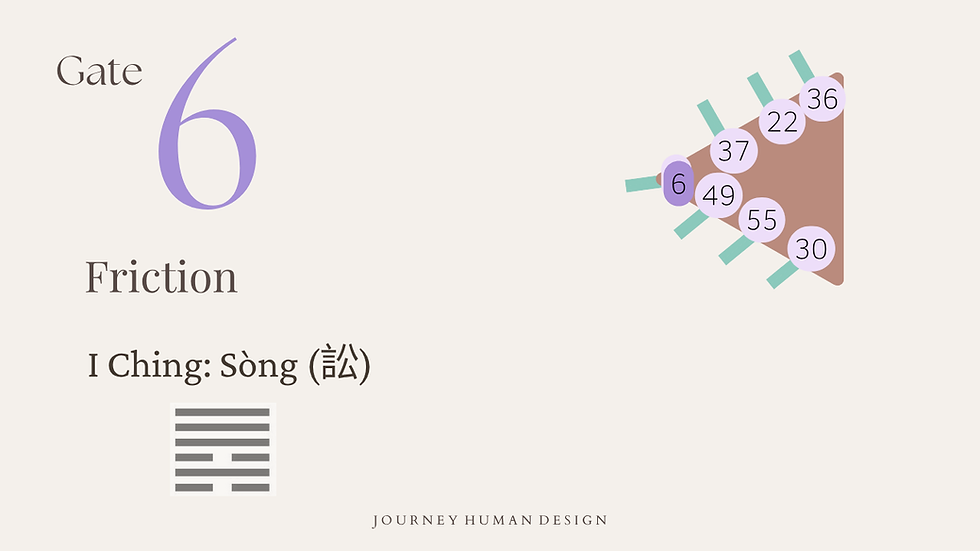
Gate 30 is one of seven gates in the Solar Plexus. I've written about all seven in Human Design Fears of the Solar Plexus, and about the center itself in The Emotional Center in Human Design. The same center also holds Gate 6, the Gate of Friction, which governs who comes close.
30-41 Channel of Recognition
Across from Gate 30 sits Gate 41 in the Root, the Gate of Contraction. Together they form the Channel of Recognition, a design of focused energy. Gate 41 carries the pressure to have a new experience, which often appears first as a fantasy or an inner image of something not yet lived. Gate 30 takes that pressure and turns it into feeling, so the image becomes a desire strong enough to move toward. The channel stands at the start of the whole experiential cycle, where wanting comes before knowing what the experience will bring.
Because Gate 30 belongs to the Solar Plexus, the desire moves with the emotional wave, rising and falling over days and weeks. Clarity about which desires to follow tends to come with time, once a wish has been felt through more than one high and low.
When both gates are defined, the pressure to begin and the intensity of desire work as one consistent theme, and a person may feel a near-constant pull toward the next experience. With Gate 30 alone, the capacity to feel desire is present while the pressure of Gate 41 comes through other people or through transits. In that configuration, a person may notice that certain people stir up longings in them that were not there the day before.
Gate 30 in everyday life
In daily life, Gate 30 often shows up as the strength of a wish. A person with this gate may carry the idea of a long trip for a year before booking anything, returning to it in conversation and feeling it more strongly each time. When the experience finally comes, it is rarely what the desire pictured, and the meaning of Gate 30 lies partly there. The feeling was real and the experience was real, and what a person learns sits in the gap between the two.
Many people with Gate 30 come to treat their desires with more patience over time. They let a longing move through a few emotional waves before acting on it, and the desires that are still burning afterwards tend to be the ones worth following. Living a desire fully, once it has been chosen with clarity, is part of what this gate is here to do.
The lines of Gate 30
Each line shapes how Gate 30 holds desire and lives it out, and the 6-line reference in my 64 Gates of Human Design Flash Cards covers every gate line by line.

If Human Design is new to you, my free Beginner's Guide is a grounded place to start. If you want to sit with the Gates in your own time, 64 Gates of Human Design Flash Cards in my shop walks through all sixty-four. When you would like to explore your own chart together, Sessions are available to book.

Comments